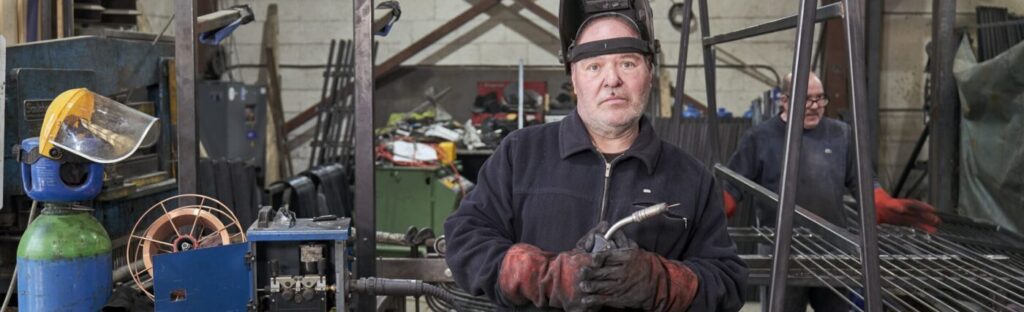
How will society see me?
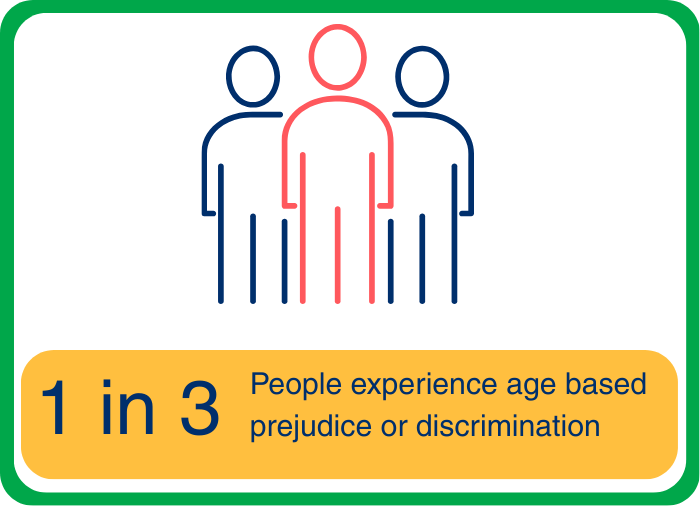
Ageism is discrimination on the basis of age. It shows in how we think, how we feel and how we act.
Older adults make substantial contributions to family, community and wider society in a range of ways – through employment, caring, childcare, mentoring, and volunteering.
Of the estimated 4.7 million unpaid carers in England[11], older people make up the highest percentage.
Older adults contribute billions to the UK economy[14]. This far exceeds the costs of social care[15].
But negative stereotypes about ageing infiltrate all aspects of society. Crucially, they affect how we see ourselves as we age, and how we look forward to getting older.
Ageing isn’t a negative thing. After all, it’s happening to all of us…
The video below explains ageism in more detail.
Ageism refers to the “the stereotypes (how we think), prejudice (how we feel) and discrimination (how we act) directed towards people on the basis of their age” (WHO, 2021).
Combating ageism
How we talk about and picture ageing are critical.
The Centre for Ageing Better Age-Friendly communication principles[16] challenge stereotypes and foster respect and inclusion.
Bringing the generations together – a powerful way of combating ageism.

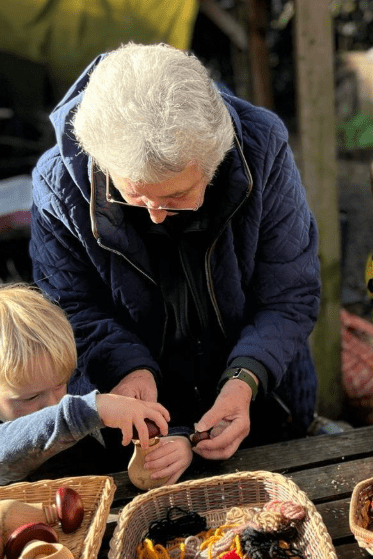
Orchard Forest School provide opportunities for positive intergenerational connections between older adults and children.
“We run intergenerational sessions once a month, where Childminders bring their early years children along to our over 50s group on a Wednesday morning to share our space, skills and make memories. Beautiful friendships and relationships have developed during these sessions, where young and old come together and learn from each other.” Louise Loram
Erith House care home hosts a ‘Mummies and Me’ group once a fortnight. Residents get to spend time, do activities and play with mothers and their babies.
Erith House care home manager Sam Vincent: “Having the babies and the mums come into Erith House has brought much happiness and joy to those living in the community. They love to play, talk about the days when their children were young and get to know the mums. It came about after a meeting we had around how we can get ourselves to be seen and help beyond the walls of Erith. We brainstormed and tried to think of all areas that we may not usually have anything to do with. We reached out to ‘Mummies and Me’ and it went from there. We weren’t sure how it was going to go, how it would work and what they would do. But after the first day of them visiting all those that attended wanted them to come back.
It is something that people living here really look forward to now. Some bring stuffed toys down from their bedrooms for the babies. The joy it brings is amazing.”
Recommendation:
Recognise and value the contribution of older adults to all aspects of society. Promote and embed age friendly language, policies and cultures
[11] Office for National Statistics (ONS), released 13 February 2023, ONS website, article, Unpaid care by age, sex and deprivation, England and Wales: Census 2021
[14] Iparraguirre, J. (ND). The Economic Contribution of Older People in the United Kingdom – An
Update to 2017 [online} available at: https://www.ageuk.org.uk/siteassets/documents/reports-and-publications/reports-and-briefings/active-communities/the_economic_contribution_of_older_-people_-update_-to_-2017.pdf
[15] Age UK (2014) Older people contribute £61bn to economy within Latest News [online]. Available at: https://www.ageuk.org.uk/latest-news/archive/older-people-contribute-6bn-economy/.
[16] Centre for Ageing Better (2021) Challenging ageism: A guide to talking about ageing and older age [online] available at: https://ageing-better.org.uk/resources/challenging-ageism-guide-talking-about-ageing-and-older-age
